
Drone Roof Inspections vs. Traditional Roof Inspections: What's the Difference?
By Rick Fleece | Seahawk Aerial Imagery
Hilton Head Island, SC
When a commercial property needs a roof inspection, the traditional approach is familiar: someone gets on the roof and physically examines the surface, flashing, penetrations, drainage systems, equipment, and other components.
Today, another tool is available.
Drone roof inspections can provide a high-resolution aerial view of a roof without requiring personnel to immediately access every area of the structure.
For commercial properties—particularly large buildings, resorts, HOAs, and properties with difficult-to-access areas—that can provide valuable information before deciding what additional inspection or maintenance work is necessary.
But a drone inspection isn't necessarily a replacement for a traditional roof inspection.
The better question is:
When does a drone make sense, and when does a property still need someone physically on the roof?
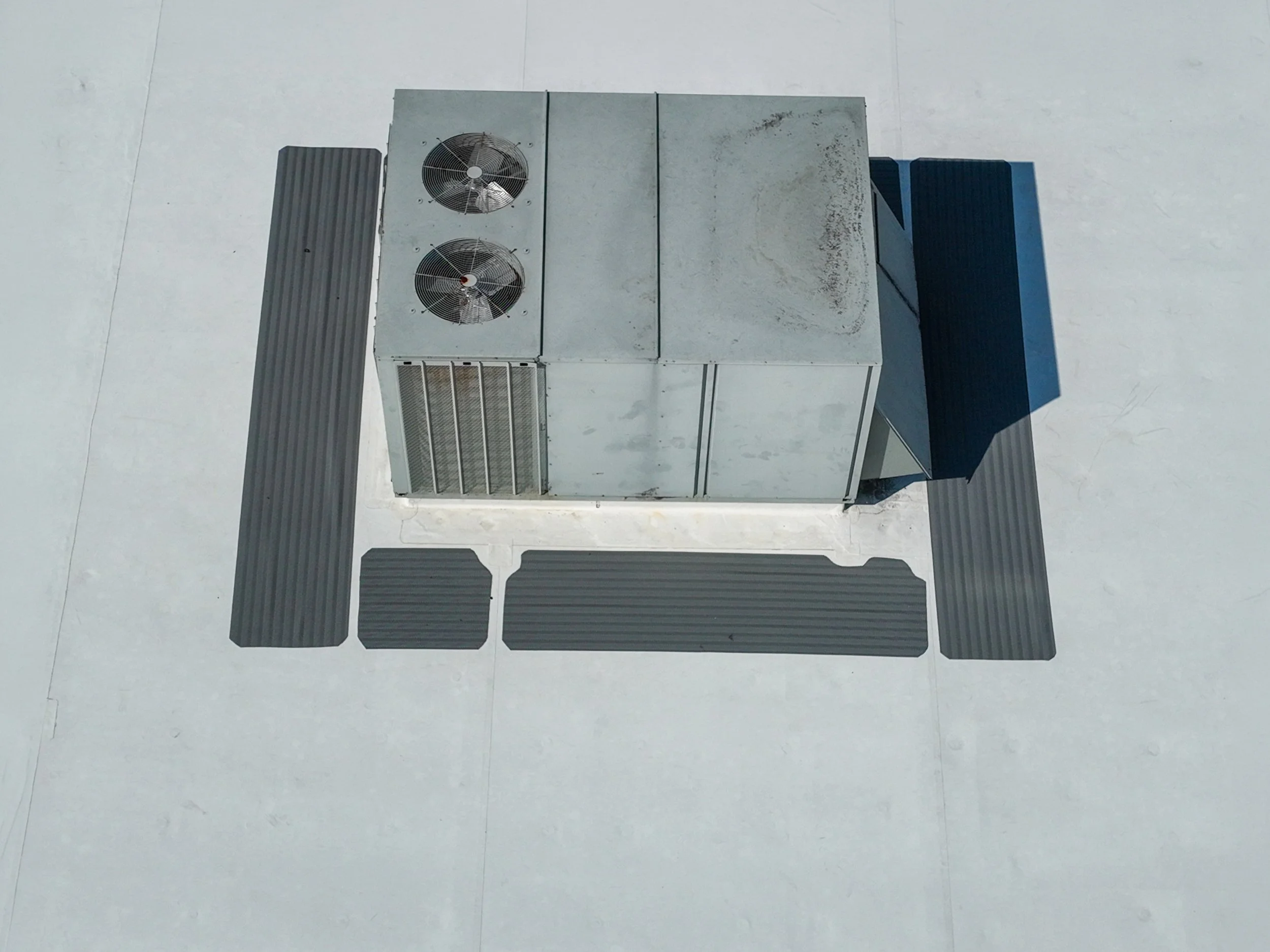
Hovering Above the Moment: A Drone’s Eye Masterpiece
What Is a Drone Roof Inspection?
A drone roof inspection uses a remotely piloted aircraft equipped with a high-resolution camera to capture detailed imagery of a roof and other exterior areas.
A properly planned inspection can document:
Roof surfaces
Flashing
Roof penetrations
Drainage areas
Rooftop equipment
Visible damage
Areas of deterioration
Building exteriors
Difficult-to-access sections
Conditions following severe weather
The resulting imagery can provide property owners and managers with a visual record of the property's condition.
For large commercial properties, this can be particularly useful because a drone can cover a significant amount of area relatively quickly.
How Does a Traditional Roof Inspection Work?
A traditional inspection generally involves a qualified roofing professional physically accessing the roof and examining its components.
Depending on the scope of the inspection, the inspector may:
Walk the roof surface
Examine roofing materials
Inspect flashing and penetrations
Check drainage systems
Look for signs of deterioration
Evaluate areas of concern
Take measurements or photographs
Make recommendations for repair or further evaluation
There is something a physical inspection can provide that aerial imagery cannot:
Direct physical examination.
An inspector can touch materials, evaluate certain conditions firsthand, and perform specialized tests when appropriate.
That's why drone inspections should be viewed as another tool in the inspection process, rather than a universal replacement for qualified roofing professionals.
Why Commercial Property Owners Should Consider Drone Assessments
For a homeowner, walking onto a roof may be relatively straightforward.
For a large commercial property, it can be a different story.
Consider a resort with multiple buildings and tens of thousands of square feet of roof area.
Before sending personnel across the entire property, a property manager may want to know:
Where are the areas of concern?
Is there visible storm damage?
Are there areas that are difficult to access?
Which sections need closer examination?
What does the roof currently look like?
How does its condition compare with previous inspections?
Aerial imagery can help answer those questions.
1. Safety
One of the most obvious advantages is reducing the need to immediately place personnel on elevated or difficult-to-access areas.
A drone can provide an initial visual assessment from the air.
That doesn't eliminate the need for qualified personnel when physical inspection is required. It simply gives the property manager another option for gathering information first.
2. Speed
A drone can document a large roof or property relatively quickly.
That's particularly valuable following a major storm when property managers need to determine which areas require attention.
Instead of immediately sending personnel to inspect every accessible area, an aerial assessment can help establish priorities.
3. Documentation
One of the biggest advantages of aerial inspection is the visual record.
High-resolution imagery can document conditions at a specific point in time.
That creates a baseline that can be useful for:
Maintenance planning
Property management
Storm documentation
Contractor communication
Before-and-after comparisons
Asset records
Over time, repeated aerial assessments can provide a visual history of a property's condition.
4. Difficult-to-Access Areas
Some areas are simply difficult or expensive to access.
Examples include:
Multi-story buildings
Steep roofs
Large commercial roofs
Building façades
Rooftop equipment
Structures surrounded by obstacles
Areas requiring lifts or specialized access equipment
A drone can often provide an initial view without requiring that equipment to be deployed.
5. Storm Damage Documentation
This is particularly relevant in the Lowcountry.
After a hurricane or major storm, property managers may need to quickly understand the condition of their properties.
Aerial documentation can help identify visible issues such as:
Missing roofing materials
Damaged exterior components
Debris
Damaged rooftop equipment
Visible water intrusion indicators
Damage to difficult-to-access areas
The imagery can then help property owners prioritize areas requiring further evaluation.
When a Traditional Inspection Is Still Necessary
A drone isn't a magic replacement for a qualified inspector.
A physical inspection may still be necessary when the client needs:
Physical examination of roofing materials
Specialized testing
Structural evaluation
Engineering analysis
Determination of the remaining useful life of a roof
Detailed diagnosis of a suspected defect
Repair or replacement recommendations
In those situations, aerial imagery can still be useful as part of the overall process.
The drone may help identify where the inspector should focus attention.
The Best Approach May Be Both
For many commercial properties, the most effective approach isn't:
Drone OR traditional inspection.
It's:
Drone + qualified professional
A property manager might begin with an aerial assessment to document the entire property and identify visible areas of concern.
A qualified roofing professional or other specialist can then conduct a physical inspection of the areas requiring additional evaluation.
This approach can potentially:
Reduce unnecessary roof access
Identify areas of concern
Focus physical inspection
Document findings
Improve maintenance planning
That's where aerial inspection becomes particularly valuable.
What Seahawk Aerial Imagery Provides
At Seahawk, our goal isn't to replace the professionals who maintain and inspect your property.
Our goal is to give you better information.
We provide professional aerial documentation and assessment for commercial roofs, buildings, structures, difficult-to-access areas, and storm damage throughout Hilton Head Island and the Lowcountry.
Our FAA Part 107-certified operations use high-resolution aerial imagery to help property owners, managers, contractors, and other decision-makers better understand the condition of their assets.
Depending on the project, we can provide:
High-resolution aerial imagery
Roof and exterior documentation
Difficult-access area imagery
Storm damage documentation
Before-and-after documentation
Organized inspection imagery
Aerial records for future comparison
Aerial Assessment Is Not a Substitute for Professional Inspection
This distinction is important.
Seahawk provides aerial documentation and visual assessment. We do not provide engineering, structural, roofing, or other licensed professional inspections unless specifically qualified and authorized to do so.
If aerial imagery identifies a potential problem, we can help document the area so the appropriate qualified professional can evaluate it further.
The objective is simple:
Give property owners better information so they can make better decisions.
Is a Drone Roof Inspection Right for Your Property?
A drone assessment may be particularly useful if you manage:
Commercial buildings
Resorts
HOAs or POAs
Marinas
Large residential communities
Industrial facilities
Multi-building properties
Properties with difficult-to-access roofs
Properties recently affected by severe weather
If you're responsible for maintaining a large or complex property, an aerial assessment can provide a useful additional perspective.
See What Your Property Looks Like From Above
Seahawk Aerial Imagery provides professional drone inspections and aerial assessments throughout Hilton Head Island, Bluffton, Beaufort, and the surrounding Lowcountry.
We're currently offering a limited number of complimentary aerial property assessments to qualified commercial properties.
Interested in seeing what an aerial assessment could reveal about your property?